





































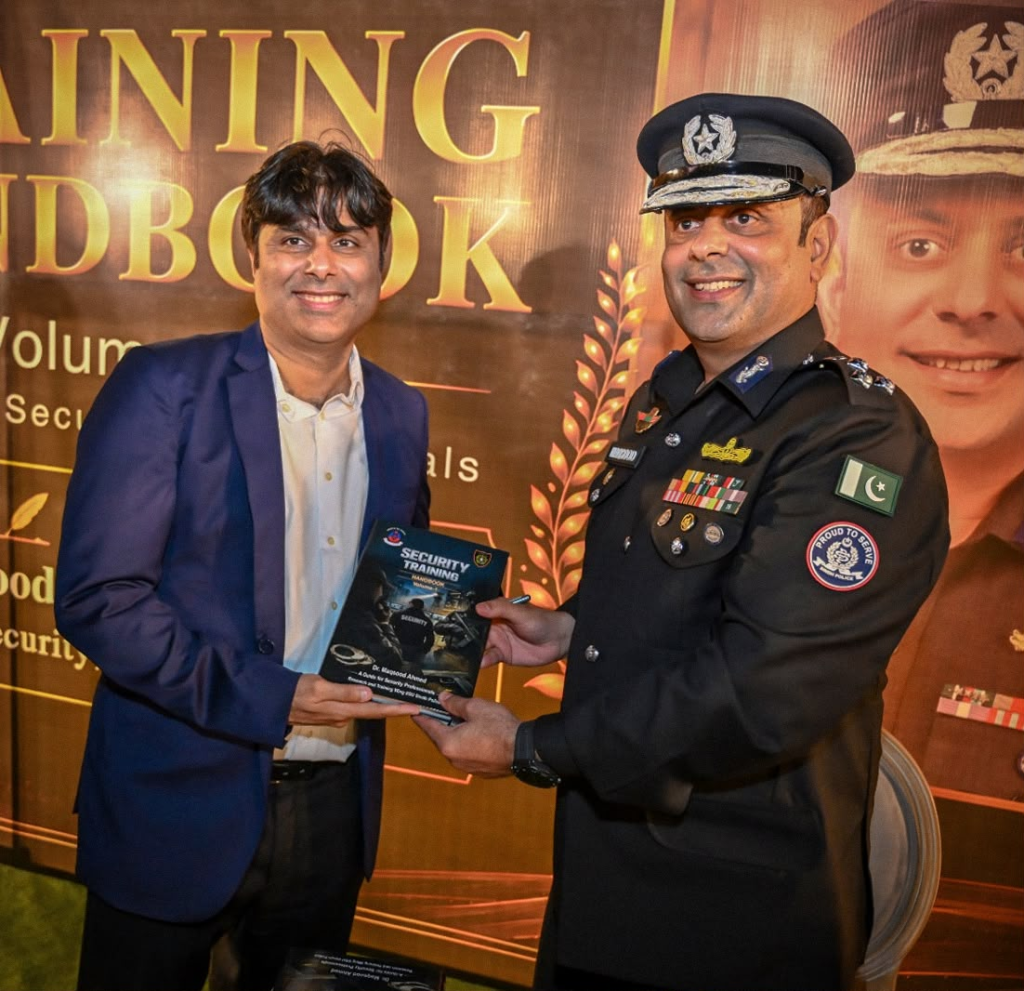
Renowned media executive and forensic expert Dr. Umair Haroon has praised Deputy Inspector General of Police for the Security & Emergency Services Division, Dr. Maqsood Ahmed Memon, for his significant contribution to reforming and modernising Pakistan’s law enforcement training infrastructure. The commendation follows the recent launch of DIG Dr. Maqsood’s Security Training Handbook (Volume-1) at the Special Security Unit (SSU) Headquarters.
Praising the author, DIG Dr. Maqsood Ahmed, for his latest achievement, Dr. Umair Haroon described the Security Training Handbook (Volume-1) as a comprehensive operational guide for Special Security Unit (SSU) personnel. It provides practical knowledge and mission-critical skills required for effective field performance across a wide range of security challenges.



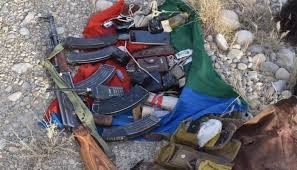
Spanning 20 carefully structured chapters, the handbook covers essential areas including the foundations of the SSU, professional security skills, operational duties, occupational health and safety, incident and evidence management, weapons handling (including shoulder and non-lethal weapons), tactical radio communication, tactical motor driving, Improvised Explosive Devices (IEDs), rings of security, protection of vital infrastructure, emergency services response, natural disaster preparedness, Protective Security Details (PSD), motorcade operations, VVIP bodyguarding, Anti-Terrorist Operations, modern trends in terrorism, and cybersecurity.
By blending international best practices with local operational realities, the handbook equips officers with the tools needed to operate confidently in both physical and digital security environments. More than a training manual, it also stands as a tribute to the courage, discipline, and professionalism of SSU officers.
The professional association between the two dates back to a key reform period when Dr. Maqsood headed the Forensic Division of the Sindh Police. At that time, Dr. Umair Haroon worked closely with him as a specialised forensic consultant from the UK’s Department for International Development (DFID). Together they focused on institutionalising scientific evidence collection, raising investigative standards, and closing operational gaps within the force.
DIG Dr. Maqsood Ahmed, the author of the handbook, is a Tamgha-e-Imtiaz recipient who holds a PhD in Terrorism Financing from the University of Northumbria, UK, and is credited with establishing Pakistan’s first ISO-certified police organisation, the SSU. Dr. Umair Haroon is a medical professional, a fellow in Forensic Medicine, and the first Pakistani diplomate of the American Board of Medicolegal Death Investigators. He also serves as President of Metro One News, is a member of the International Academy of Television Arts & Sciences, and is a jury member of the International Emmy Awards. His endorsement highlights the strategic and academic value the new handbook brings to Pakistan’s national security apparatus.